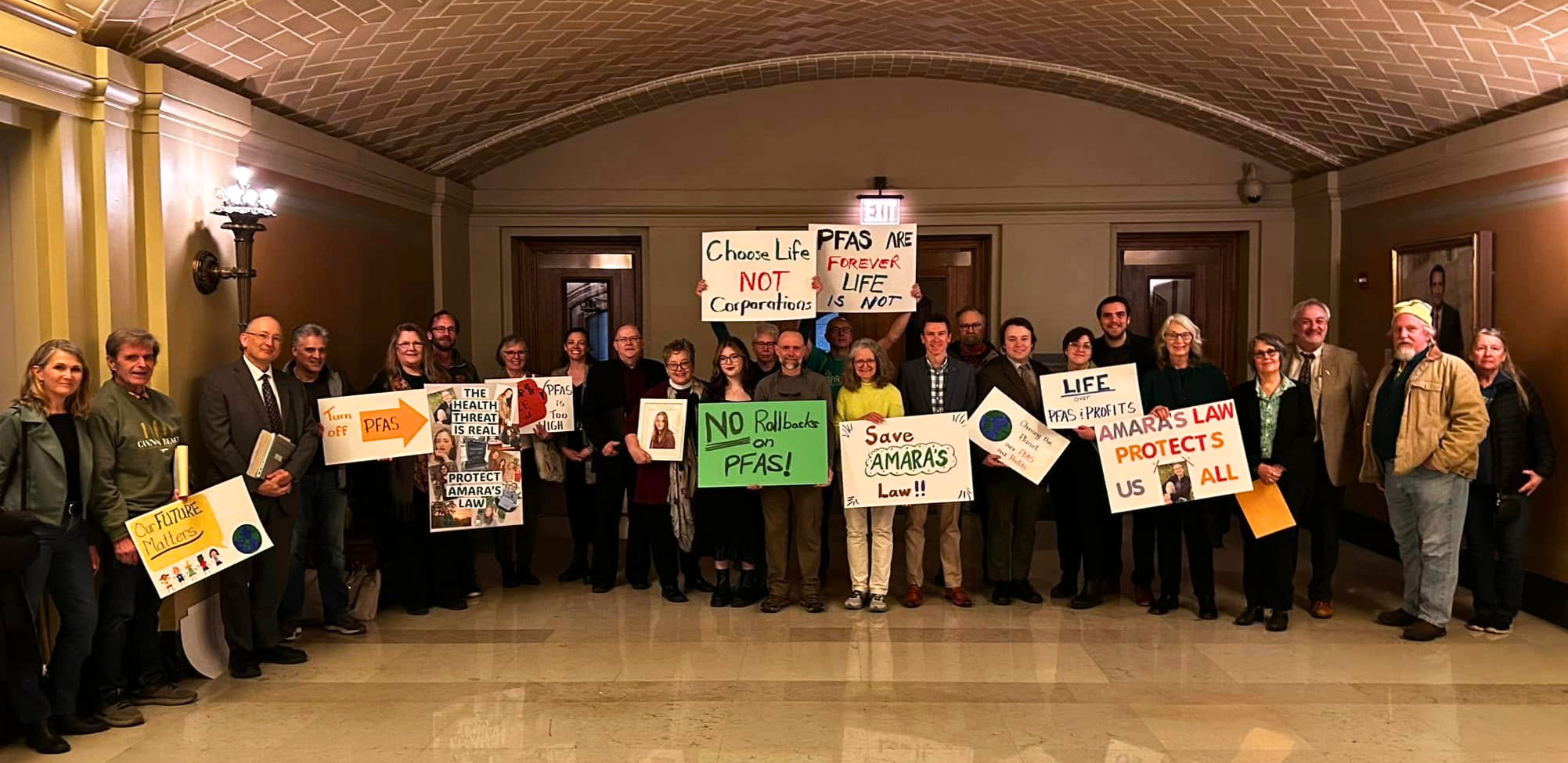
As we enter the second year of the legislative biennium, all eyes are on the Capitol Investment Committees. Legislators across Minnesota are advocating for projects to bring needed infrastructure and improvements back to their districts. It’s an important process. But as conversations about spending ramp up, we must also talk honestly about hypocrisy.
In 2023, Minnesota passed Amara’s Law. On January 1, 2025, implementation began. This landmark policy is the strongest ban on toxic PFAS “forever chemicals” in the nation. Its purpose is clear: protect human health, safeguard our environment, and reduce the enormous financial burden PFAS contamination has placed on taxpayers.
PFAS chemicals don’t break down. They’re called “forever chemicals” for a reason. They accumulate in our bodies, our water, and our soil. They’re linked to cancer, thyroid disease, immune system suppression, reproductive harm, and other serious health concerns.
Yet since the law passed, powerful industry groups and manufacturers have worked to dismantle it. They push for loopholes, exemptions, and extended timelines that would allow them to continue selling products in Minnesota that contain these toxic chemicals. They argue for flexibility and feasibility, and they argue about cost.
They’re really arguing for more time to profit.
Simultaneously, legislators will request millions of taxpayer dollars for PFAS-related cleanup. Communities across Minnesota need funds for new water treatment systems, filtration upgrades, landfill mitigation, and other infrastructure improvements to address contamination. These investments are necessary. Clean water is not optional.
We cannot ignore the toxic cycle we are trapped in.
Pro-PFAS groups push to weaken Amara’s Law so they can continue selling products that contaminate our water and our bodies. Those products reach the end of their life and end up in landfills. Landfills leach into groundwater. PFAS moves into drinking water supplies. Minnesotans are exposed. Then taxpayers are asked to foot the bill for cleanup.
It’s backwards, irresponsible, and entirely preventable.
PFAS is a Minnesota-made problem. These chemicals were pioneered by 3M. Internal company documents dating back seven decades show that manufacturers knew PFAS was toxic and persistent, yet continued to produce and sell it. We are still living with the consequences.
The world is watching to see how we respond. Japan, England, and France have come to Minnesota to film documentaries about Amara’s Law. Lawmakers from New South Wales, Australia have studied our approach. Minnesota has become a global model for confronting PFAS contamination at its source rather than endlessly paying for cleanup.
To weaken or delay this law now would send the wrong message — that when billion-dollar industries apply pressure, public health takes a back seat.
Amara’s Law is not extreme. It’s measured and practical. The law includes a clear pathway for exemptions for products deemed essential for the health, safety, and functioning of society. If a manufacturer believes its product is essential, it can make that case. That’s reasonable and balanced policymaking.
What’s not reasonable is allowing widespread, non-essential uses of PFAS to continue simply because companies do not want to act.
Delaying implementation will not make the problem cheaper. It won’t make contamination disappear. It won’t protect communities. It will only increase long-term costs — both financial and human.
Legislators are not beholden to billionaires or multinational corporations. They answer to the people of Minnesota who expect safe drinking water, parents who don’t want toxic chemicals in their children’s products, and taxpayers who are tired of paying for corporate pollution.
This will be a short legislative session. There are real issues demanding attention: housing, healthcare, education, and infrastructure. Corporate welfare disguised as regulatory “relief” should not be on the agenda.
To the committee chairs facing pressure to hear bills that would carve up Amara’s Law: hold firm. Do not give these proposals oxygen. Minnesota has already done the hard work of passing a nation-leading law. Implementation is underway and going well. There is no justification for going backward.
As we look toward 2026, Minnesotans will remember who stood up for clean water and who stood with corporate polluters. They will remember who protected public health and who prioritized industry profits.
Clean water, healthy families, and fiscal responsibility are not partisan issues. They are Minnesota values. Let’s act like it.


