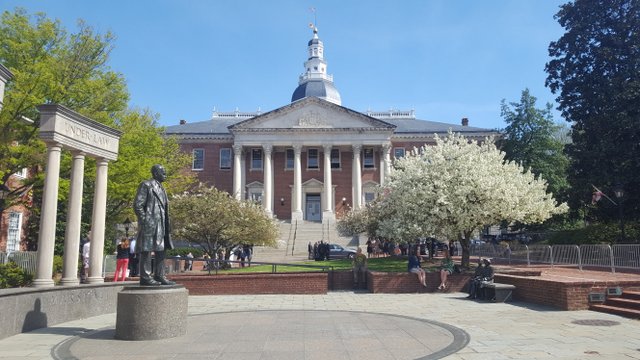
On Monday, Maryland passed a critical legislative deadline called “Crossover.” To keep moving forward after this deadline, a bill must have passed either the Senate or the House and crossed over into the opposite chamber.
With less than three weeks to go until the end of Maryland’s legislative session, here is what’s happened with our Clean Water priorities – and how you can take action to get two of them over the finish line!
Clean Water Priorities Still Moving Forward:
Wasted Food Reduction and Diversion Grants: Delegate Boyce and Senator Hester's bill now creates and funds grants for on-farm composting, food waste reduction, and food waste diversion. These grants will provide critical support to both build the infrastructure to get food out of our waste stream and into more beneficial uses – to hungry people, animals, or healthy soils. Read more in WasteDive.
Support Wasted Food Reduction and Diversion Grants!
Septic System Inspections: Delegate Guyton and Senator Brooks's bill will require a septic system inspection when a home is sold, or at least every three years when a home gets a new tenant. Inspections are an effective tool to catch these failing septic systems earlier, protecting human health and the environment from untreated waste.
Take action for safer septic systems!
Clean Water Priorities Not Passing This Year:
CHERISH Our Communities Act: This landmark environmental justice legislation developed by the Mid-Atlantic Justice Coalition’s Maryland table would have adopted best practices from New Jersey, Minnesota, and New York to Maryland to protect disproportionately polluted communities from the cumulative impacts of pollution.
Unfortunately polluting industries succeeded in blocking the passage of a meaningful foundation for progress on environmental justice in Maryland this year, despite support from the Maryland Community Coalition for the Environment, the Maryland Legislative Black Caucus, the Maryland Legislative Latino Caucus, the Maryland State Council on Cancer Control, the Maryland Commission on Environmental Justice and Sustainable Communities, the League of Women Voters, the Maryland Children’s Environmental Health and Protection Advisory Council, and many more. Read more in Maryland Matters.
The Bottle Bill: Every year in Maryland, over 5.5 billion beverage containers are sold, yet only one in four is recycled. That means more than 4 billion bottles and cans are tossed every year, piling up in landfills, spewing toxins in incinerators, or polluting our rivers and streams to threaten wildlife and contaminate drinking water. The Bottle Bill would have dramatically increased recycling rates and decrease litter and pollution, but did not make enough progress by Crossover to move forward.
Banning Chemical Recycling: “Chemical recycling” is a category of processes that use incineration and other industrial methods to convert plastic materials into low-grade fossil fuels or chemicals. They are inefficient and will create new public health and environmental problems due to the staggering volume of solid, liquid and airborne waste produced. Rather than waste money on false solutions to the plastic crisis, Maryland should focus on strategies that reduce the amount of plastic produced and consumed in the first place; but this legislation to ban these polluting technologies in Maryland did not advance this year.
We’re working hard during the remaining two weeks of the legislative session to make progress for clean water, clean air, and healthy communities. Take action with us today!


